



Zhouzhi lies along the northern foot of the Qinling range, an hour by road west of Xi’an. Very little of the county’s kiwifruit goes abroad, and whatever does taste nothing like fruit out of New Zealand or Chile. Geography explains most of that. History explains some.
This is about place rather than product. Where the advantages are genuine, and where buyers are being sold something.
The mountains do most of the work
The Qinling runs east to west and takes the edge off both the northerly in winter and the southerly damp in summer. Down on the northern slope the vines get cold enough to go properly dormant, but seldom cold enough to do real damage.
Plantings here start around 500 metres and carry on up past 800. Ripening comes later higher up and acidity keeps better; blocks lower down arrive sooner and softer. Knowing which band a block sits in tells you much of what you need to know before anyone cuts anything open.
Late September days still make the high twenties while nights come down near 10°C, ten or twelve degrees of swing. Sugar accumulates across days like those without the acid going too quickly. Warm nights on flatter ground keep respiration running all night, so fruit there can hit an identical Brix and taste flat.
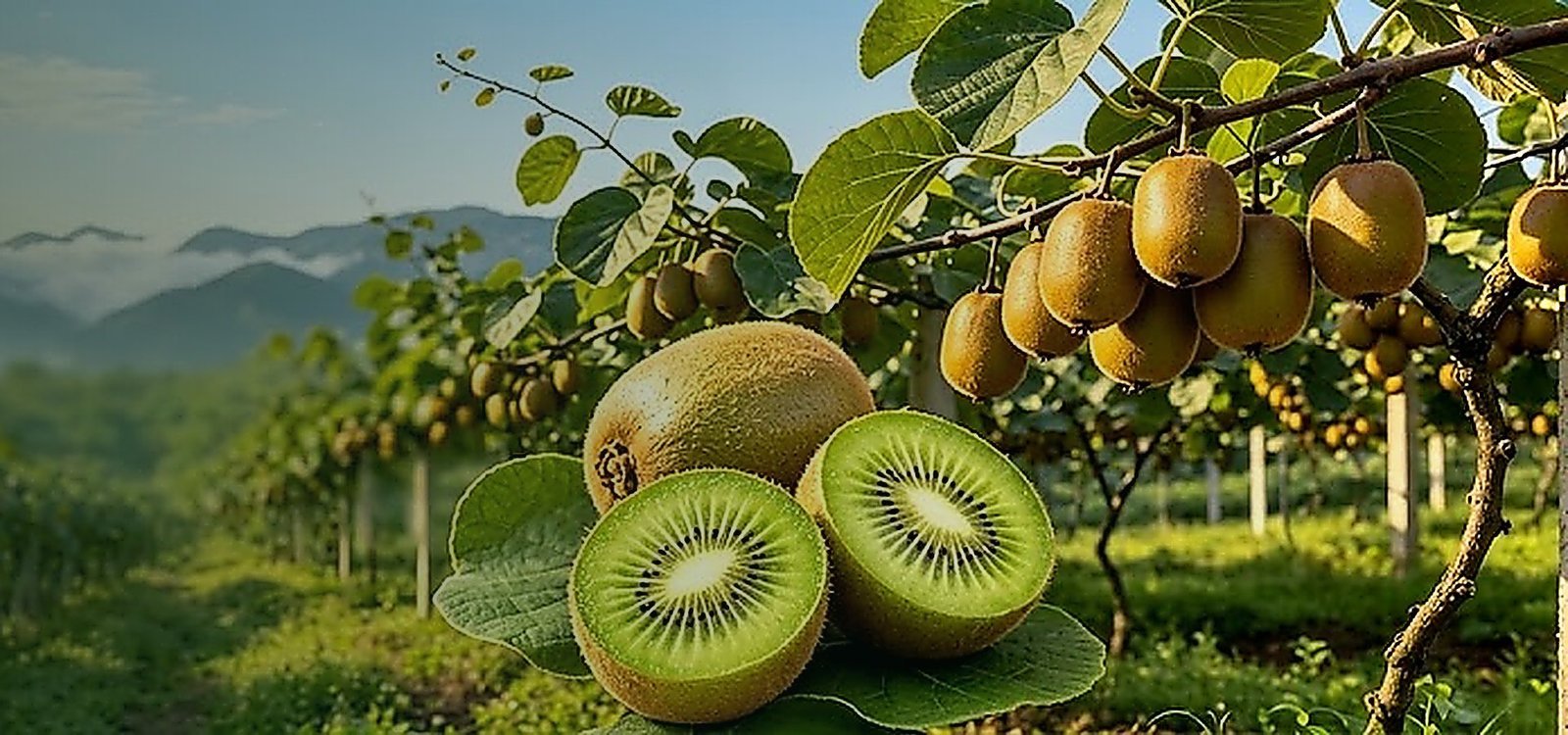
Loess, water and what gets irrigated
The ground is loess derived, running to sandy loam wherever drainage is reasonable, with pH somewhere between 6.5 and 7.5. Vines cope with poor soil better than they cope with wet soil, and a slope means water passes through instead of standing at the roots.
Six or seven hundred millimetres of rain falls in a year, most of it through midsummer, and that will not carry a heavy crop to picking. Drip and fertigation now go into nearly every commercial block, and operations that take this seriously meter water by block rather than by farm.
This is where management starts to matter more than geography. Two neighbouring blocks on the same slope can produce very different fruit if one is over irrigated in the last month before harvest. We have seen fruit from a wet block read well on Brix and still go soft in transit, because the cells were full of water when it was picked.
The varieties are local now
Kiwifruit reached Zhouzhi in the 1980s, Hayward almost exclusively. What followed was decades of provincial breeding work aimed at local conditions, and that work changed what grows here.
Cuixiang comes early, carries aroma and picks from late September. Xuxiang does the heavy lifting, coming later and firmer, and shipping further than most buyers assume. Ruiyu is the newer arrival, large and firm enough for long sea freight. Red flesh types like Hongyang are planted in smaller amounts and want more care at every step.
Hayward is still planted, and it is still what most importers recognise on sight. Local varieties are why the difference is in flavour rather than only in price, with Cuixiang the likeliest to surprise somebody. Nobody expecting supermarket green has met that flavour before.
Vine age counts for as much as variety and rarely gets raised at all. Vines in fourth or fifth leaf give a light crop of big, patchy fruit. The same plants at ten years carry a proper load and bring it on evenly. When we quote a season, we quote by block, because two blocks of the same variety a kilometre apart can be three years apart in age.
Harvest timing
Picking starts in the last week of September for early Cuixiang and runs into mid October for Hayward and the later blocks. The window is short, and the weather during it decides the year.
A dry October gives clean fruit with high dry matter. Wet weather brings stem end disease and pushes everybody to pick sooner than they would choose. A block taken a week early because of that cannot be told apart in the shed. Two months later the buyer is looking at the difference.
We sample before picking and hold blocks that have not reached dry matter, even when the calendar and the buyer’s schedule both say go. It is not a popular decision in a short season.
The honest half
Everybody selling fruit talks up their origin. This part aims to be straight.
The real advantages are freshness and cost. Fruit can go from the vine to a pre-cooled container in a day. Freight to Southeast Asia, the Middle East and Russia is short compared with the route from New Zealand. Land and labour costs are lower, and that shows in the price.
Where the difficulty really lies is consistency after picking. New Zealand and Chile spent decades building maturity standards, cooling discipline and a chain where each handler follows one specification. Exporters here cover a wide range. Two companies loading in the same county can send you entirely different boxes.
That gap is closing, but it is not closed. A buyer comparing Chinese kiwifruit with European or South American fruit should compare the supplier’s post-harvest process, not just the price and the origin.
What that leaves you with
Origin suggests what the fruit is capable of tasting like. Handling decides what it actually tastes like by the time it reaches you.
Flavour out of cool ground with wide day night swings, Zhouzhi has in quantity. Boxes turning up in identical condition every time is another conversation, and it starts with cooling, grading and loading rather than with price.
We are a grower and packer in Zhouzhi, not a broker, so we have a stake in this. Our own base and packing operation are described on the about page, including the blocks we farm and the lines we run. For the variety that best fits your market, the Ruiyu kiwifruit page is a good place to start.